
Macon's Red Clay Soil and What It Means for Concrete
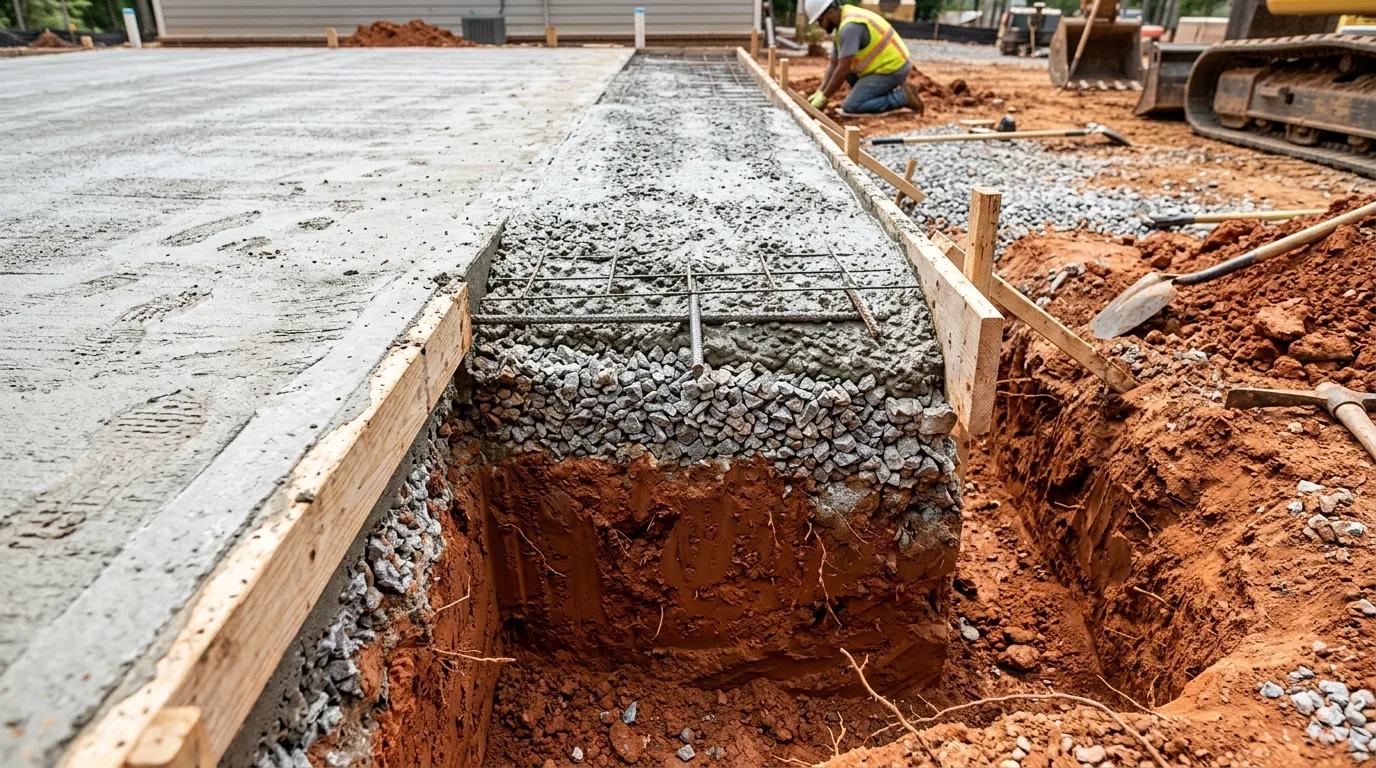
Homeowners in Macon, Georgia spend millions of dollars every year repairing concrete that was installed without accounting for the ground it sits on. Bibb County’s dominant soil — Cecil clay loam, the expansive red clay that gives Georgia its distinctive color — is one of the most challenging substrates for concrete flatwork in the American Southeast. Understanding how it behaves, and how proper concrete installation in Macon accounts for it, is the difference between a driveway that lasts 30 years and one that needs major repair in five.
Get Concrete Built Right for Macon's Soil
Macon Concrete Pros understands Bibb County's clay soil. Call (888) 376-0955 for a free, soil-informed estimate.
Why Macon’s Red Clay Matters for Concrete Projects
Cecil clay loam is classified as a high-shrink-swell soil — it absorbs water and expands, then dries out and contracts, with volume changes that can reach 15% or more. This behavior is the primary driver of concrete problems throughout Bibb County. When Macon’s spring rains saturate the soil, clay beneath driveways and patios swells and pushes upward. During summer droughts, that same clay shrinks and pulls away, creating voids that slabs bridge — and eventually crack under vehicle and foot loads.
This cycle repeats every year. Concrete in the Ingleside Historic District and College Hill neighborhoods — where homes sit on native clay with minimal original base preparation — experiences this stress most acutely. Homeowners who see stair-step cracks in brick veneer, sloping floors, or slabs that rock underfoot are often observing clay movement working against inadequately built concrete.
The consequences go beyond aesthetics. Concrete that cracks from clay movement allows water infiltration. In Macon’s climate, that water freezes in winter — expanding by approximately 9% in volume and widening the crack further with each of the 30–40 annual freeze-thaw cycles Middle Georgia experiences from November through March. A hairline crack in November can be a significant structural crack by spring if left unaddressed.
Types / Options: How Different Projects Are Affected by Clay
Driveways: The highest-traffic, highest-load concrete surface in most Macon homes. Vehicle weight concentrated on a cracked or settled driveway accelerates deterioration. Driveways poured directly on native clay without a gravel base typically show cracking within 5–10 years, compared to 25–30 years for properly prepared installations. See our concrete driveway page for Macon for what proper installation involves.
Patios: Lower load than driveways but more susceptible to drainage-related clay saturation. Patios near garden beds, downspouts, or low-lying areas of Macon yards are especially vulnerable because clay saturation from concentrated water is more severe than in well-drained open areas.
Slabs and foundations: The highest stakes of all. A concrete foundation in Macon that doesn’t account for clay movement depth, drainage, and reinforcement can cause structural settlement that cracks the home above it. Foundation problems are dramatically more expensive to remediate than surface concrete repairs.
Concrete repair: Clay movement is the root cause of most concrete repairs in Macon. Surface-only repairs — filling a crack without addressing the clay saturation or drainage causing the crack — typically fail within 1–3 years. Sustainable concrete repair in Bibb County must address the soil condition beneath the slab, not just the slab surface.
Practical Uses: What Proper Clay-Soil Concrete Installation Looks Like
- Gravel base, 4–6 inches compacted: The standard for all concrete flatwork in Macon. Gravel provides drainage that prevents clay saturation directly beneath the slab, and load distribution that bridges minor clay movement. Never allow a contractor to skip this step in Bibb County.
- Proper slope and drainage: All concrete flatwork in Macon should slope away from structures at a minimum 2% grade. Poor drainage that allows water to pool near concrete perimeters is the leading cause of clay saturation and the subsequent shrink-swell cycle beneath slabs.
- Control joints: Cut or formed at regular intervals (typically every 8–10 feet for residential slabs), control joints give the concrete a planned place to crack as clay movement occurs — directing minor movement to inconspicuous locations rather than random surface cracks.
- Rebar or fiber reinforcement: Reinforcement doesn’t prevent cracks from clay movement — it keeps cracked sections from separating and allows the slab to continue performing structurally even when minor cracking occurs.
- Regular sealing: Sealing concrete every 2–3 years prevents water from penetrating surface cracks, which interrupts the freeze-thaw widening cycle that turns minor clay-induced cracks into major structural damage.
How Clay Soil Affects Foundation Work in Macon
Concrete foundation work in Macon demands specific attention to clay soil behavior. The expansive clay in the Shirley Hills and North Macon areas — including newer construction built during Macon’s growth period — has caused settlement issues in homes built without adequate soil assessment. Footings that don’t reach below the active zone where clay moisture fluctuates most will experience differential settlement, manifesting as sticking doors, sloping floors, and stair-step cracks in masonry.
Proper foundation depth in Macon accounts for both frost depth (minimum 12 inches in Georgia’s USDA Zone 8a) and clay activity depth — the zone where seasonal moisture changes drive the most movement. In many Bibb County locations, this means footings of 18–24 inches or deeper. Drainage tiles alongside footings and perimeter drainage systems prevent the clay saturation that initiates the shrink-swell cycle closest to foundation walls.
Planning Concrete Work in Macon? Soil Matters.
Call Macon Concrete Pros at (888) 376-0955 for a free estimate that accounts for Bibb County's clay soil conditions.
Cost Factors
Clay soil conditions affect concrete project costs in Macon in predictable ways. Base preparation is the biggest variable: standard 4-inch gravel base compacted in lifts adds $0.50–$1.00 per square foot compared to minimal base prep, but prevents the failure modes described above. Sites with saturated clay, disturbed soil from previous construction, or demonstrated drainage problems may require deeper base prep or drainage correction before concrete work begins — adding $500–$1,500 to the total project cost.
Drainage corrections — regrading, French drain installation, or downspout rerouting — are frequently needed alongside concrete repair or replacement projects in Macon’s older neighborhoods. The concrete work alone won’t solve a clay saturation problem; the water source must also be addressed. Our concrete cost guide for Macon covers typical pricing for all related work.
Frequently Asked Questions
Does red clay soil affect all concrete in Macon equally?
Clay soil affects all concrete in Macon, but the impact varies by location, drainage conditions, and original installation quality. Properties in low-lying areas with poor drainage, or on steeper grades where runoff concentrates near concrete, experience more clay saturation and therefore more movement. Properties with good natural drainage and carefully graded yards tend to have longer-lasting concrete even without exceptional base preparation. The most consistently problematic conditions in Macon are near downspouts, garden beds, and any area where water visibly pools after Bibb County’s 47 annual inches of rainfall.
How do I know if clay soil is causing my concrete problems?
The classic signs of clay-related concrete failure in Macon: multiple cracks oriented in the same direction (rather than random branching), settlement that follows seasonal patterns (worse after dry summers, sometimes improving after wet springs), slabs that rock slightly underfoot, and concrete that has heaved rather than settled (rising in some areas while sinking in others). These patterns suggest soil movement rather than purely load-related cracking.
Can I fix clay-related concrete damage without addressing the soil?
Surface repairs to concrete damaged by clay movement provide temporary improvement at best without addressing drainage and soil conditions. A crack fill or resurfacing overlay applied over a slab that is still experiencing clay movement will typically show failure within 1–3 years. Lasting concrete repair in Macon requires diagnosing and addressing the clay saturation or drainage condition that is causing the movement. See our concrete repair page for Macon for how we approach this.
Build Concrete That Lasts in Macon's Clay Soil
Macon Concrete Pros provides soil-informed concrete installation and repair throughout Bibb County. Call (888) 376-0955.
Related: